
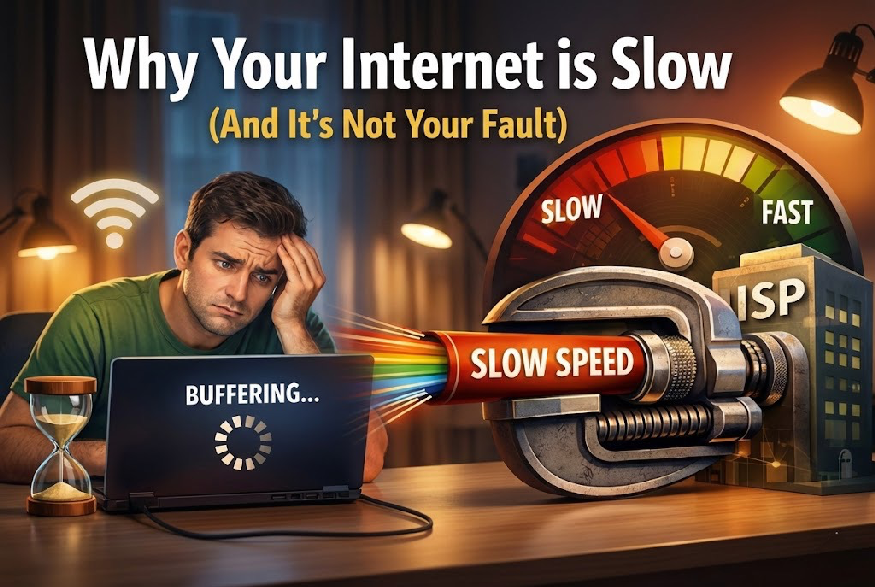
Why Your Internet is Slow (And It’s Not Your Fault)
Have you ever found yourself staring at a spinning wheel, waiting for a website to load or a video to buffer? You’re not alone. Slow internet speeds are a frustrating reality for millions of people around the world. But here’s the thing: it’s not your fault. Your internet service provider (ISP) might be intentionally slowing down your connection, and it’s not just about network congestion or outdated infrastructure. There’s a more sinister force at play: internet throttling.
What is Internet Throttling?
Internet throttling occurs when an ISP intentionally slows down or limits your internet bandwidth, usually to manage network congestion, reduce costs, or prioritize certain types of internet traffic. This can result
Why Do ISPs Throttle the Internet?
ISPs throttle the internet for several reasons:
- Network Congestion: To manage network congestion during peak hours, ISPs might throttle internet speeds to prevent network overload.
- Cost Savings: By throttling internet speeds, ISPs can reduce the amount of bandwidth they need to provide, resulting in cost savings.
- Prioritization: ISPs might throttle certain types of internet traffic, such as video streaming or online gaming, to prioritize other types of traffic, like online banking or email.
- Data Caps: Some ISPs impose data caps on their customers, throttling internet speeds once the cap is reached.
The Unsettling Truth: ISPs Can See Everything You Do Online
What’s even more alarming is that ISPs can see everything you do online. They have access to your browsing history, search queries, and online activity. This means they can:
- Monitor Your Online Activity: ISPs can track your online activity, including the websites you visit, the apps you use, and the content you stream.
- Collect Your Personal Data: ISPs can collect your personal data, including your IP address, location, and device information.
- Use Your Data to Throttle Your Internet Speed: ISPs can use your data to throttle your internet speed based on your online activity. For example, if you’re streaming video content during peak hours, your ISP might slow down your internet speed to manage network congestion.
References
PureVPN: Can police track a VPN in 2024?
Surfshark: Can police track your VPN activity.
NordVPN Support: What does ISP see when I’m using NordVPN?
Nym Technologies How VPNs affect speed—and protect privacy.
Norton: Does a VPN slow down your internet? + How to speed it back up.